Search is evolving faster than ever, and choosing the best SEO tools for small businesses has become critical for staying competitive.
AI-powered search results are expanding, organic click-through rates are changing, and traditional SEO tactics alone are no longer enough to stay competitive.
However, one fact remains consistent:
Businesses that use the right SEO tools backed by the right strategy, experience, and data continue to win visibility across Google Search, YouTube, and AI-driven discovery platforms.
Below is a list of SEO tools for small businesses in 2026, selected based on the real-world usability, performance impact, and alignment with modern SEO requirements, including AI search visibility.
My Top SEO Tools for Small Businesses (2026)
1. Semrush
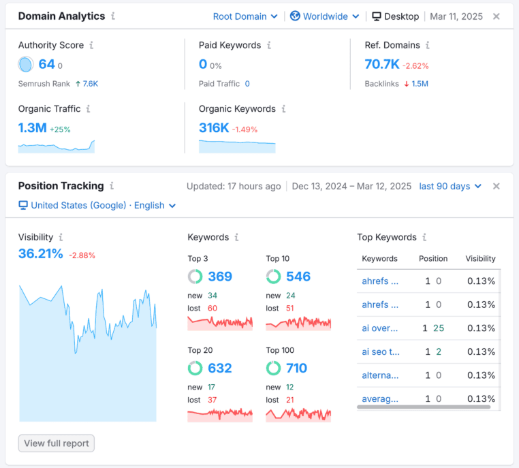
Semrush remains one of the most trusted SEO tools for small businesses, used globally for over a decade.
It supports keyword research, competitor benchmarking, backlink analysis, PPC insights, and content performance tracking, making it suitable for both growth-stage businesses and established brands.
Its newer AI Search insights allow brands to monitor how they appear in AI-generated responses across the leading large language models.
This helps businesses understand and expand their visibility beyond traditional SERPs while maintaining SEO fundamentals.
2. SEOGets
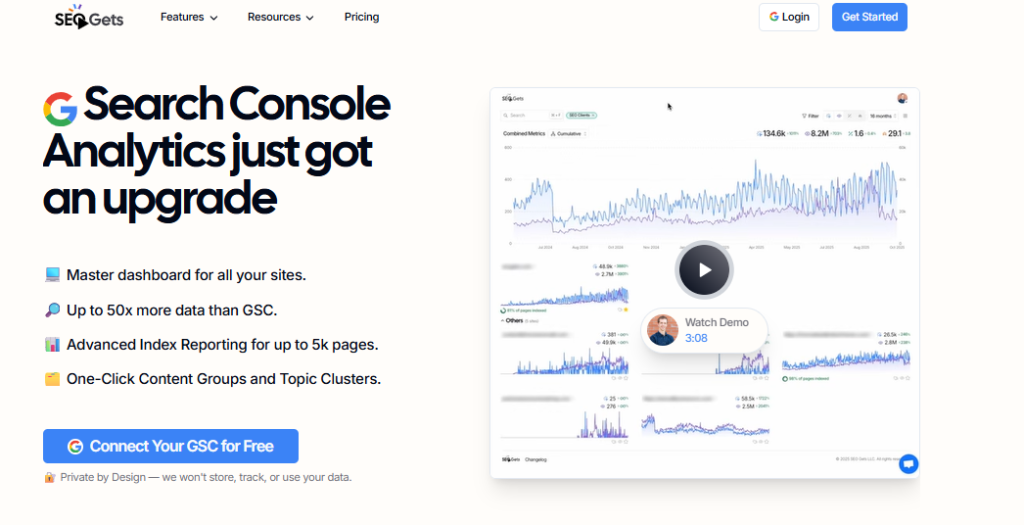
SEOGets simplifies Google Search Console data by presenting multiple websites in a single, clear dashboard.
This makes it easier to identify traffic trends, declining pages, and growth opportunities without manually switching accounts.
This is one of the best SEO tools for small businesses, allowing agencies to monitor and report performance for multiple websites at the same time, saving hours of manual work each week.
3. Screaming Frog
Screaming Frog SEO Spider is a technical SEO essential.
Trusted by over 50,000 SEO professionals worldwide, including HubSpot and Shopify agencies, it replicates how search engines crawl websites and uncovers broken links, crawl errors, and internal linking issues.
Advanced integrations with GA4, Google Search Console, and OpenAI allow deeper analysis and content optimisation workflows.
4. ChatGPT
ChatGPT is not a replacement for SEO tools, but it is a powerful strategic companion.
It supports SEO planning, content structuring, topical research, and troubleshooting complex challenges when guided with clear prompts.
Marketers can create content outlines for a tech blog covering AI trends in under 15 minutes, then validate with Semrush for keyword difficulty.
Used correctly, it enhances efficiency and decision-making rather than generating generic outputs.
5. Keyword Insights
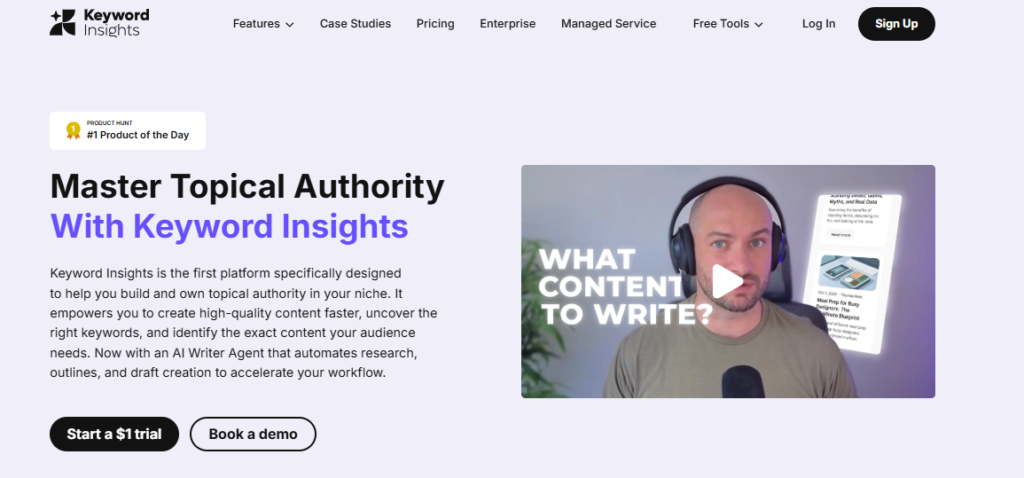
Keyword Insights helps organise large keyword datasets into topical clusters, enabling stronger internal linking and topical authority critical for competitive niches.
This structure not only improves site navigation but also builds topical authority, which is critical for ranking in competitive niches.
As one of the most affordable SEO tools, it delivers powerful insights without the high cost, making it ideal for small businesses looking to optimise their content strategy effectively.
6. Detailed
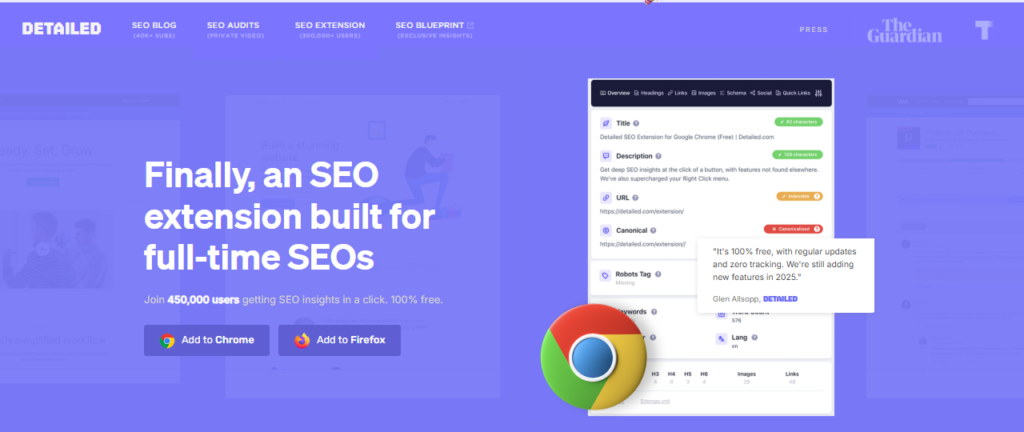
Detailed is a lightweight Chrome extension that instantly displays on-page SEO elements such as headings, metadata, schema, and internal links.
With one click, you can analyse top-ranking pages, troubleshoot issues like missing canonical tags, and save time on audits.
It also reveals content structure, helping you spot competitor patterns, top-performing strategies, and gaps in your own articles.
Additionally, Detailed highlights technical SEO factors like schema markup and hreflang attributes, making it easy to optimise pages.
As one of the top SEO tools for small businesses, it’s ideal for those seeking quick, actionable insights.
7. Yoast SEO
Yoast SEO is a popular WordPress plugin that helps small businesses improve both on-page and technical SEO.
With its free version, you can optimise titles, meta descriptions, URL slugs, and preview your pages in search results, acting as an intuitive on-page SEO checker.
As you write, Yoast provides real-time insights, highlighting issues like uneven keyword distribution, missing links, or absent target keywords, with actionable suggestions.
Not only that, but it manages technical SEO tasks such as XML sitemaps, canonical URLs, and schema markup, making it easier for search engines to crawl your site.
As one of the best SEO tools, Yoast is ideal for beginners and small businesses seeking a complete technical SEO tool and basic SEO analytics platform.
8. Clearscope
Clearscope focuses on content relevance and semantic optimisation, helping pages align with real search intent rather than keyword stuffing.
It suggests the frequently-searched keywords and trending topics, so you can create content that matches what your audience is actively looking for.
Its content optimisation feature highlights popular questions and helps ensure your pages meet user intent, adding value and improving ranking potential.
One standout feature is the ability to revive underperforming content, showing pages losing traffic and offering insights to update keywords, improve depth, or refresh information.
Last but not least, Clearscope is the powerful all-in-one solution for smarter, results-driven content.
9. Featured
Featured connects subject-matter experts with authoritative publishers, supporting brand credibility, digital PR, and backlink acquisition.
Unlike traditional PR outreach, it simplifies the process by providing ready-to-publish expert insights.
By answering questions from trusted brands like Entrepreneur, HubSpot, National Geographic, and GoDaddy, you can get featured in high-authority articles.
The platform also lets you track your submissions, from “In Review” to “Published,” making it easy to monitor success and measure the impact of your outreach efforts.
10. BuzzStream
BuzzStream streamlines link-building outreach, helping teams manage relationships, track follow-ups, and scale campaigns efficiently.
It helps businesses find authoritative websites by searching target keywords, providing contact details, and identifying the best opportunities.
Once prospects are found, you can send personalised outreach emails at scale and automate follow-ups.
The platform also tracks email performance, letting you see which templates and subject lines work best.
By streamlining outreach and follow-ups, BuzzStream makes it easier to build high-quality backlinks and grow your online presence efficiently.
SEO Tools for Small Businesses: Pricing, Pros & Cons
| Tools | Pricing | Pros | Cons |
| Semrush | From $139.95/month Limited free plan | All-in-one SEO & competitor insights AI search visibility tracking | Complex for beginners Paid plans needed |
| SEO Gets | $49/month Free version available | Centralised multi-site GSC reporting Saves time for agencies and content teams | Data volume can feel overwhelming for beginners. |
| Screaming Frog | $259/year Free version available | Deep technical SEO insights Strong integrations with GA4, GSC, and OpenAI | Desktop-only software No cloud-based access |
| ChatGPT | From $20/month Free version available | Excellent for SEO planning and ideation Turns complex ideas into actionable frameworks | Requires clear prompts for quality output |
| Keyword Insights | From $58/month $1 trial available | Organises keywords into topical clusters Supports scalable content planning | Limited interface customization |
| Detailed | Free | Fast, browser-based on-page SEO checks Ideal for quick audits | Image alt-data requires export |
| Yoast SEO | From $99/year Free version available | Clear optimisation guidance Strong technical SEO support for WordPress | Can feel restrictive for advanced users |
| Clearscope | From $189/month Free trial available | Identifies underperforming content Integrates with Google Docs & WordPress | Overuse of suggestions may dilute brand voice |
| Featured | From $49.75/month Limited free plan | Builds authority via earned media Transparent backlink attribution | Placement is not guaranteed |
| BuzzStream | From $24/month | Organised outreach workflows Strong relationship management | Initial learning curve |
How Pixel Media 360 Supports SEO Growth?
Tools alone don’t deliver results.
Pixel Media 360 applies data-backed SEO frameworks, content optimisation strategies, and authority-building techniques to help businesses turn insights into measurable growth.
Our clients, including SMEs in e-commerce, SaaS, and hospitality sectors, have seen up to 3x ROI growth through targeted SEO campaigns.
From technical audits to content strategy and backlink acquisition, our approach focuses on long-term visibility, conversions, and ROI, not vanity metrics.
Conclusion
SEO success in 2026 depends on tool selection, strategic execution, and experience-driven decision-making.
While tools provide data and automation, sustainable growth depends on knowing when and how to use them effectively.
Small businesses that align the right platforms with clear SEO objectives can compete in highly competitive markets without relying on shortcuts.
Frequently Asked Questions
Small businesses typically benefit from combining keyword research, technical SEO, content optimisation, and performance tracking tools based on their growth stage and competition level.
ChatGPT supports SEO planning, ideation, and structure, but it works best alongside data-driven SEO platforms for validation and performance tracking.
Free tools are great for beginners, while paid tools offer advanced features. Many small businesses use a combination for the best results.
Google Business Profile, local rank trackers, and backlink tools help boost visibility for nearby customers.