


Imagine you’ve just launched a new website, but no matter what you do, it barely appears on Google. You know your content is great, but without the right links pointing to your site, it’s like shouting in an empty room. This is where backlinks come in.
A strong backlink strategy helps search engines see your site as trustworthy and authoritative. By learning how to get backlinks from relevant and high-quality sources, you can boost your SEO, attract more visitors, and grow your online presence.
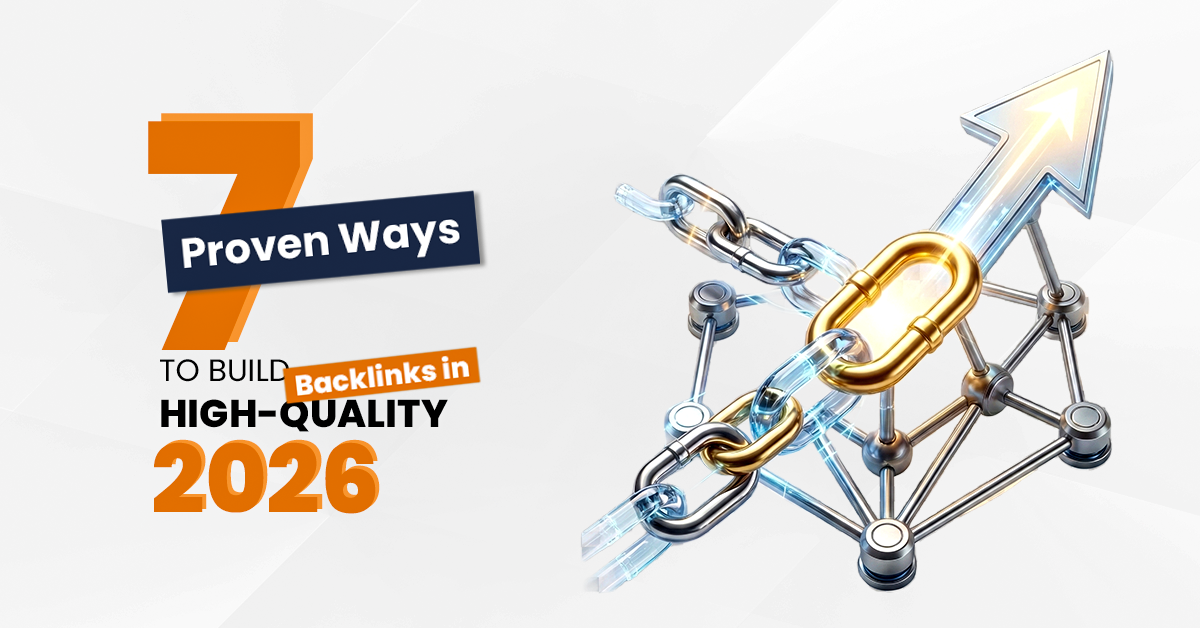
In this blog, we’ll explore proven ways to build high-quality backlinks in 2026, so you can create a robust backlink profile that truly works.
What Are Backlinks?
Backlinks are links from other websites that point to your site. They act as a vote of confidence, showing search engines that your content is trustworthy and valuable. A strong backlink profile is essential for SEO because it can boost your site’s visibility and authority.
Not all backlinks are equally effective. Relevant backlinks from high-authority sites are much more valuable than links from low-quality sources.
Regularly performing a backlink audit helps you identify which links are helping your site and which may be harming your SEO efforts.
In short, understanding how to get backlinks and focusing on quality over quantity is the foundation of any successful SEO backlink strategy.
Ways to Build High-Quality Backlinks in 2026 [Proven]
Building high-quality backlinks in 2026 requires a mix of traditional methods and modern strategies. The key is to focus on creating backlinks that are relevant, authoritative, and sustainable. Here are some proven methods:
Method 1: Guest Blogging on High-Authority Sites
Guest blogging is one of the most effective ways to earn quality backlinks. By contributing valuable articles to reputable websites in your niche, you not only get backlinks but also increase your brand visibility.
Step 1: Identify relevant websites in your niche with high domain authority (DA 50+) using tools like Ahrefs, SEMrush, or Moz. You can also search Google with queries like “your niche + write for us” or “your niche + guest post”.
Step 2: Analyze their content to see what type of articles get the most engagement or backlinks. Make sure your topic is relevant to their audience.
Step 3: Pitch your idea via email. Keep it short and professional: mention your topic idea, why it would be useful for their readers, and a brief introduction of yourself.
Step 4: Write high-quality content following their guidelines. Include one or two natural backlinks to your site, making sure they fit contextually.
Step 5: Follow up if you don’t get a response within 7–10 days. Track your published posts and note the backlinks earned to measure impact on your backlink profile.
Method 2: Publish Original Research and Case Studies
Creating original research or case studies is a powerful way to attract relevant backlinks. Data-driven content is highly shareable and often cited by other websites, helping you strengthen your backlink profile.
Step 1: Choose a trending topic or common problem in your niche. For example, “2026 Social Media Trends for Small Businesses.”
Step 2: Collect data through surveys, polls, or internal business insights. Tools like Google Forms, Typeform, or industry reports can help you gather accurate information.
Step 3: Create your research content in a clear, professional format. Include charts, infographics, and statistics to make it visually appealing. Naturally embed keywords to optimize for SEO.
Step 4: Promote your research by reaching out to bloggers, journalists, and relevant websites. Share it on LinkedIn, Twitter, and niche communities. Offer it as a resource others can cite, which helps you create backlinks.
Step 5: Track backlinks using Ahrefs, SEMrush, or Google Search Console. Monitor which sites link to your research and continue outreach to attract more links over time.
Method 3: Use the Broken Link Building Strategy.
Broken link building is a smart way to create backlinks while helping webmasters fix issues on their sites. By finding broken links and offering your content as a replacement, you can earn quality backlinks from relevant websites.
Step 1: Use tools like Ahrefs, Check My Links, or Broken Link Checker to find broken links on high-authority sites in your niche.
Step 2: Identify pages where your content can serve as a suitable replacement. Ensure it’s relevant and provides value to the readers.
Step 3: Reach out to the webmaster or content manager with a polite email. Highlight the broken link and suggest your page as a replacement.
Step 4: Follow up if you don’t get a response within a week. Keep track of backlinks you earn and include them in your backlink audit to maintain a healthy backlink profile.
Method 4: Build Relationships with Influencers & Industry Experts
Connecting with influencers and industry experts is a long-term backlink strategy that can bring highly relevant backlinks and improve your brand authority. Collaborations such as interviews, co-authored articles, or expert roundups are effective ways to generate backlinks.
Step 1: Identify influencers and experts in your niche using platforms like LinkedIn, Twitter, or niche-specific communities.
Step 2: Engage with their content—comment on posts, share insights, and build rapport before making any collaboration request.
Step 3: Reach out with a clear proposal for collaboration, such as an interview, guest article, or expert quote.
Step 4: Ensure any content you collaborate on includes natural backlinks to your site. This helps strengthen your SEO backlink strategy.
Step 5: Maintain ongoing relationships for future opportunities, keeping your outreach and link-building efforts consistent.
Method 5: Engage in Community & Forum Participation
Participating in online communities and forums is a practical way to create backlinks while sharing your expertise. When done correctly, these backlinks are relevant and can drive targeted traffic to your site.
Step 1: Identify active communities in your niche, such as Reddit, Quora, industry-specific forums, or Facebook Groups.
Step 2: Observe discussions to understand common questions or problems, and contribute meaningful, helpful answers.
Step 3: Include backlinks to your content only when it adds value and directly addresses the discussion. Avoid spamming links, as low-quality backlinks can harm your backlink profile.
Step 4: Stay consistent by engaging regularly. Over time, your contributions build trust and authority, increasing the likelihood that others reference your content and generate quality backlinks.
How Pixel Media Can Help You Build High-Quality Backlinks and Boost Your SEO?
Pixel Media specializes in backlink strategies that help businesses strengthen their SEO backlink strategy and improve search engine rankings.
By combining off-page SEO techniques like guest blogging, digital PR, influencer collaborations, and community engagement, Pixel Media ensures your website earns quality backlinks from relevant sources.
With a professional team handling backlink audits, competitor analysis, and targeted outreach, you can grow a strong backlink profile that supports long-term SEO success.
Partnering with Pixel Media means your link-building efforts are not just effective but also sustainable, helping your site generate more traffic and authority in 2026.
Conclusion
Building high-quality backlinks is no longer just about getting as many links as possible, it’s about earning links that are relevant, authoritative, and sustainable.
By applying practical strategies like guest blogging, publishing original research, broken link building, influencer collaborations, and community participation, you can steadily improve your website’s authority and visibility.
Focusing on a thoughtful backlink strategy and maintaining a strong backlink profile ensures your SEO efforts deliver long-term results.
With consistent effort and the right approach, generating quality backlinks in 2026 can become a manageable and highly rewarding part of your overall digital marketing plan.
Frequently Asked Questions
You can create backlinks by sharing your content on relevant websites, guest posting, contributing to forums, collaborating with influencers, or publishing original research that others naturally reference. The key is to focus on quality and relevance.
You can earn free backlinks by participating in online communities, submitting articles to free directories, writing guest posts on blogs that don’t charge, answering questions on platforms like Quora, or creating shareable content that others link to naturally.
A backlink is a link from another website to your site. In SEO, backlinks act as votes of confidence, signaling to search engines that your content is trustworthy and authoritative.
No, link-building is not illegal as long as it follows search engine guidelines. Avoid spammy tactics, paid links without disclosure, or link schemes, as these can harm your SEO. Ethical link-building is safe and effective.
AI can assist in identifying link opportunities, generating outreach emails, and analyzing competitor backlinks, but it cannot fully create backlinks on its own. Building quality backlinks still requires human effort and relationship-building.