

You invest time in creating SEO friendly articles, optimise every web page, and wait for traffic to grow, but what you notice is that your rankings barely move.
Meanwhile, a competitor with similar content keeps climbing higher in search results.
Do you know why?
Most of the time, it is just because of the quality of their backlinks.
Building links is still one of the strongest signals search engines use to measure trust and authority.
This guide explains how building links works, what makes a backlink valuable, and practical ways to earn links that support long-term SEO growth.
What Is Link Building in SEO?
Link building is the process of getting other websites to link to your own. You can think of these links as “votes”.
The more credible sites pointing to your content, the more trustworthy it looks to search engines like Google.
Google sees high-quality backlinks as a signal that your site has authority and valuable information.
When multiple reputable websites link to you, it can help your pages rank higher in search results.
The Importance of Building Links in SEO
Building links is not just important for getting ranked, but it also directly impacts the visibility and credibility of your site.
High-quality backlinks can not only drive more visitors from other sites but also increase brand recognition and help your content reach the right audience.
This is important when it comes to SEO strategy because, over time, link building helps your website grow authority in your niche and strengthens your long-term success.
What Affects a Backlink’s Value in Link Building?
Not all backlinks are equal. Some, like the ones from the spammy sites, have little to no impact, while others can greatly boost your rankings.
1. Authority Backlinks and Domain Strength
Links from authoritative websites usually carry more weight in SEO.
For example, a backlink from a well-known site like bbc.co.uk will likely have a bigger impact on your rankings than one from an unknown blog.
You can use certain tools like Semrush and Ahrefs to measure a website’s authority using Authority Score. This score ranges from 0 to 100.
It considers certain factors, including:
- The quality and number of backlinks a site has
- Estimated monthly visitors from search engines
- How clean and spam-free the site’s backlink profile is
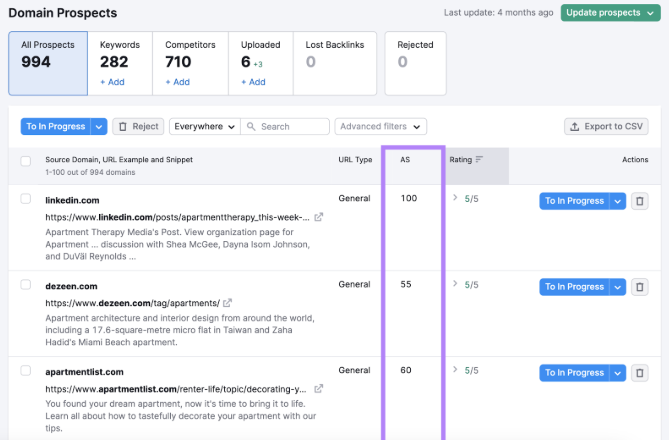
As far as the Semrush Link Building Tool is concerned, you can see a site’s Authority Score in the “AS” column when evaluating prospects.
On the other hand, earning links from less authoritative sites is still valuable.
A natural backlink profile includes a mix of high- and low-authority sites.
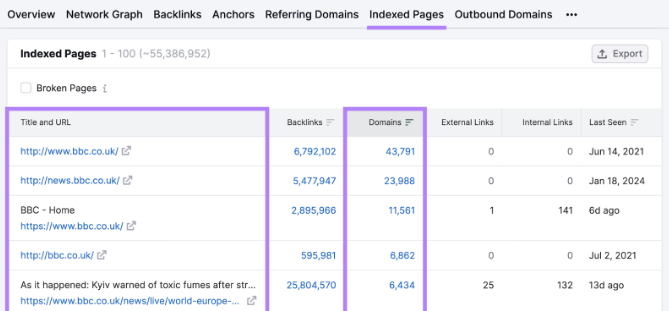
For example, even the BBC’s profile shows many links from smaller, low-authority sites and fewer from highly authoritative ones.
2. Relevance in Link Building
Backlinks are more valuable when they come from websites within the same niche you are working in.
When sites related to your field link to you, it shows search engines that experts consider your content trustworthy.
For example, you run a website offering digital marketing services, and you get three different backlinks:
Backlink 1: From a travel blog about vacation tips.
This adds little value because the site and topic aren’t related.
Backlink 2: From a blog about small business growth.
This has some value since it’s somewhat related to marketing.
Backlink 3: From a marketing blog’s “top SEO agencies for 2026” guide.
This is highly valuable because it’s directly relevant and genuinely useful to readers.
3. Strategic Link Placement for Better SEO
Another important factor is the strategic link placement. This means that the link position on a page actually determines how much SEO value it provides.
Google uses a model called “Reasonable Surfer Model” to estimate how likely the users are to notice and click on the link.
The links which are added in sidebars, footers, or less visible areas usually carry less benefit.
Whereas the most effective links are added within the main content, ideally in the beginning, because they are more likely to catch the user’s attention.
4. Anchor Text Optimisation in Building Links
The clickable text of a backlink is known as anchor text, which helps search engines understand what the linked page is about. It can also show:
- How the linked page relates to the topic of the content it appears in
- Which keywords the linked page might rank for
For example, using specific anchor text like “best email marketing tools” is much more helpful than a generic phrase like “click here.”
At the same time, anchor text should be read naturally. Over-optimising it with too many exact-match keywords can look spammy and may even hurt your rankings.
How to Build Authority Backlinks Links (and How Not to)?
There are several ways to build links, and while some deliver great results, others might not be as effective.
1. Earn Links Naturally Through High-Quality Content.
Earning links means other websites link to your content without you asking.
This approach is cost-effective because you do not have to pay them anything in exchange for a link.
Not only this, but it also keeps you safe from Google’s spam penalties.
One of the best ways to earn links is by creating high-quality content that naturally attracts attention, often called “link bait.”
For this, you need to focus on content that people find useful and shareable, such as:
- Visual assets like infographics, charts, diagrams, and images
- Original research and data such as industry studies, surveys, or proprietary research
- Online tools and calculators
- In-depth guides and tutorials
If you want to see which pages on your site, or even your competitor’s site, earn the most backlinks, you can use tools like Ahrefs or Backlinks by Semrush.
2. Ask for Links with Ethical Outreach.
To ask for links, you need to reach out to website owners or content teams and request a backlink.
You’re more likely to get a link if:
- Your content provides value to their readers
- The site owner wants to give credit for something you contributed
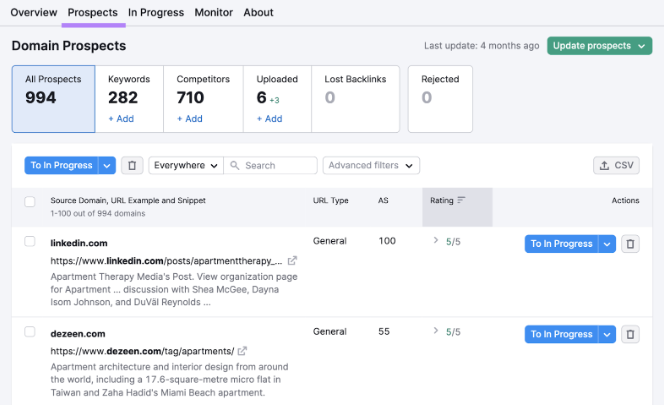
To make your research and homework easy, you can use tools like Semrush’s Link Building Tool.
This tool will help you find high-quality sites that might link to you.
But how?
Actually, it looks at your competitors and the keywords you are targeting to suggest potential prospects.
Once your project is set up, you can review these prospects in the “Prospects” tab, decide which ones to reach out to, and track the entire outreach process very smoothly.
3. Start Building Links Through Guest Posting and Citations.
Adding the links manually does not usually have an impact because Google does not count them as natural backlinks.
But this does not mean that you stop adding the links.
These links can still be useful for helping users find your content, but make sure you’re not adding them just for SEO.
Spammy link placement can hurt your brand and even go against Google’s guidelines.
For example, you might add links to:
- Your social media profiles
- Business directories
- Forums, communities, or Q&A sites (like Quora)
- Blog comments
- User profile pages
4. Buying Links in SEO
You should avoid buying links just to improve your SEO rankings.
If you do pay for links, make sure they use rel=”sponsored” or rel=”nofollow”. These tags tell search engines to ignore the links for ranking purposes.
Buying links without these tags goes against Google’s guidelines and can lead to penalties or ignored links.
It’s fine to hire a link building agency to help you earn links naturally, but never pay a website simply to host your links.
Best Backlink Building Strategies That Work in 2026
Here are some of the most important strategies for building links in 2026.
1. Replicating Your Competitor’s Backlinks.
If a website is linking to one of your competitors, there’s a good chance they might be willing to link to you as well.
A practical way to start is by looking at who links to your competitor’s homepage.
These links usually refer to the business as a whole, rather than a specific page that you may not have.
By analysing your competitors’ backlinks, you can discover valuable link opportunities and identify patterns in their link building strategy.
You can then use these insights to build similar high-quality backlinks for your own website.
2. Targeted Link Outreach
If you have a specific page that you want to rank for a particular keyword, targeted link outreach can be very effective.
Start by identifying the top-ranking pages for your chosen keyword. Then, research where these pages are getting their backlinks from.
These websites are more likely to link to your content because they already link to similar pages in your niche.
Once you have a list of potential sites, reach out with a personalised message.
Explain why your content is valuable to their audience and how it complements or improves upon what they already have.
Remember: the goal is to provide value, not just ask for a link.
Offering helpful resources, data, or unique insights increases the chances that the site owner will link to your page.
3. Creating Linkable Assets
In SEO, a linkable asset, sometimes called “link bait”, is content designed to attract backlinks from other websites naturally.
These assets are useful, shareable, and provide value to your audience, making other sites more likely to reference them.
Linkable assets can take many forms, such as:
- Original research or reports that provide insights for your niche
- Interactive resources that solve a problem for users
- Lists or recognitions that others want to reference
- Step-by-step content that educates and informs
- Unique phrases or concepts your audience might reference
- Infographics, GIFographics, or “Map-o-graphics” that simplify complex information
To maximise the impact of linkable assets:
- Make sure your content stands out from what’s already available.
- Share it via social media, newsletters, and targeted outreach.
- Include embed codes for visuals or clear citations for research.
When done correctly, creating linkable assets can attract high-quality backlinks naturally, improve your authority in the industry, and drive long-term SEO success.
4. Content Promotion
Creating great content is just the first step; promoting it is what helps it earn backlinks and reach the right audience.
Here are some effective ways to promote your content:
4.1 Advertising
Paid promotion can put your content in front of thousands of relevant people quickly, though it may require a significant budget.
4.2 Influencer outreach
Identify thought leaders in your industry and share your content with them. If your content resonates, they might share it with their audience, generating more exposure and potential backlinks.
4.3 Building a following
Start an email list if you haven’t already, and stay active on platforms like LinkedIn and Twitter. Consistently publishing quality content helps you attract followers who may naturally link to your work.
4.4 Promote older content
Don’t forget to reference your past content in new posts. This not only keeps it relevant but can also encourage new backlinks.
5. Guest Posting for Building Links
Guest posting is a popular way to build backlinks, but it’s sometimes criticised because some people overuse it in a spammy way.
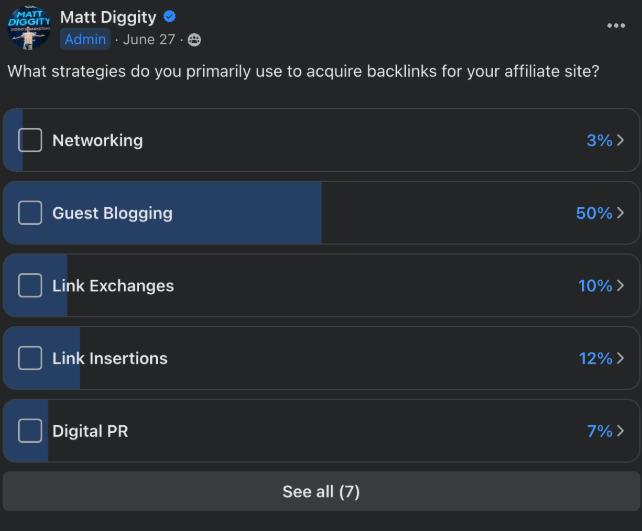
When done correctly, however, it’s a highly effective method.
To get your content published on top blogs in your industry, you need to pitch a strong, valuable article idea.
A helpful approach is to perform a content gap analysis:
- Look at a few competitors of the blog you want to write for.
- Identify topics that drive traffic to their sites but haven’t been covered on the target blog.
- Pitch an article that fills that gap with valuable insights; these are often hard for blog owners to refuse.
Another effective tactic is to find an underperforming article on the blog and offer to rewrite it.
If you can show that your version will perform better in search results and attract more traffic, the blog owner is likely to accept your pitch.
Guest posting done thoughtfully not only earns backlinks but also builds authority and visibility in your industry.
Start Building Strong and Quality Links Today!
High-quality backlinks are key to improving your search rankings and growing your website’s authority.
Start by focusing on relevant, trustworthy, and natural links.
If you need guidance or support to create effective link-building strategies, you can reach out to a link building agency such as Pixel Media 360.
They can help you plan and execute a strong and sustainable backlink strategy without any guesswork.
Every quality backlink brings you closer to better visibility, more traffic, and stronger online authority.
Frequently Asked Questions
For building links, you need to create valuable content and reach out to relevant websites or guest posts. Not only this, but you also need to focus on earning high-quality and authoritative links to improve your search rankings.
Backlinks are the links from other websites that point to your site. Link building is the process of earning or creating these links, and it can include strategies like guest posting, outreach, or fixing broken links. Unlike backlinks, internal links (links between pages on your own site) don’t count.
Choose a link building agency that uses white-hat practices, has proven results, and provides clear reporting. For expert guidance, you can reach out to Pixel Media 360 which provides the best SEO link building services.
Authority backlinks come from reputable and high-authority websites. These links carry more weight in SEO and help your site rank higher while boosting trustworthiness in your niche.