


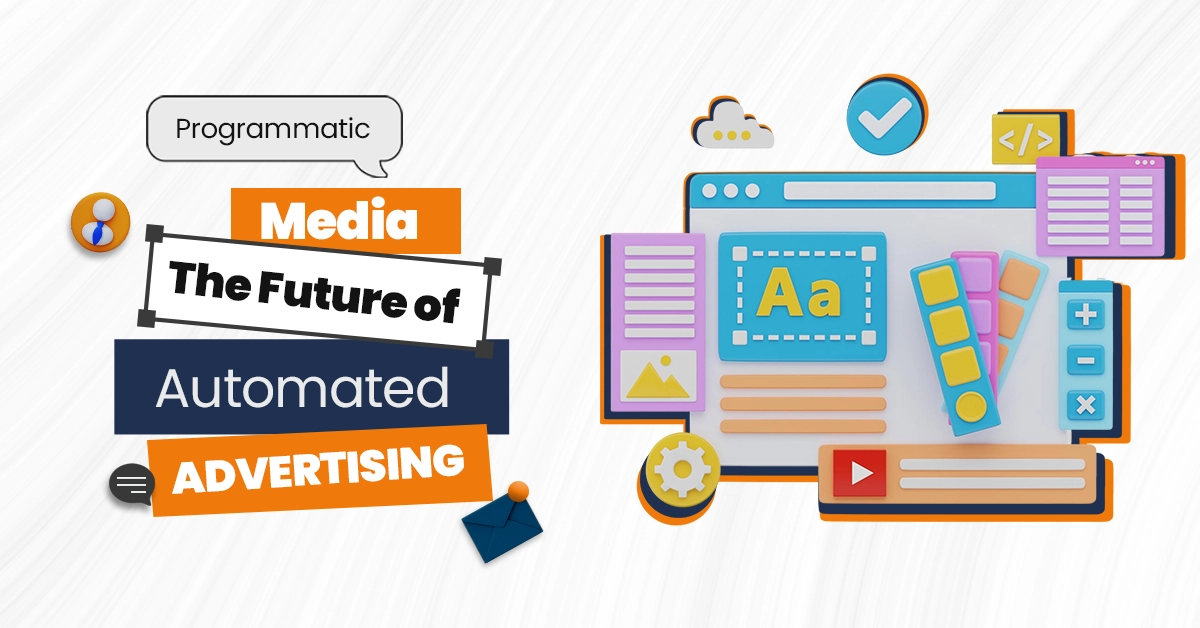
Imagine you’re launching a new product and want your ads to reach the right people at the exact right time. Instead of guessing where to place your ads, a programmatic media agency can help by using real-time data and automation.
This approach, known as programmatic media, makes digital advertising faster, smarter, and more efficient.
To understand what is programmatic media, think of it as technology that buys ad space automatically based on audience behavior. When brands build a solid programmatic media buying strategy, they can target customers more accurately and adjust campaigns instantly.
And once you learn how programmatic media buying works, even simple programmatic media buying tips can improve performance.
With the growing demand for automation, high-quality programmatic media services are becoming essential for any brand hoping to stay ahead in today’s digital market.
What Is Programmatic Media?
Programmatic media is a modern way of buying and placing digital ads using automation and data.
Instead of manually choosing websites or guessing where your ads should appear, programmatic technology makes these decisions in real time.
When someone asks, what is programmatic media, the simplest answer is: it’s an automated system that helps brands reach the right audience at the right moment.
Brands often work with a programmatic media agency to manage campaigns, track performance, and improve targeting. These agencies use advanced tools, smart data, and reliable programmatic media services to make advertising more efficient.
With the right programmatic media buying strategy, businesses can reduce wasted spend, improve results, and reach customers more precisely across display, video, social, and other digital channels.
How Does Programmatic Media Buying Work?
To understand how programmatic media buying works, imagine a smart system that makes advertising decisions for you, faster than any human ever could.
Instead of manually choosing websites or negotiating with publishers, programmatic technology uses automation, data, and real-time bidding to place your ads exactly where they have the highest chance of success.
Here’s a clear, step-by-step explanation:
1. A User Visits a Website or App
The process starts the moment a user lands on a webpage or opens an app.
The system collects anonymous signals about the user such as interests, behavior, device type, or location. No personal identity is shared; it’s all done through privacy-safe data.
2. A Real-Time Auction Begins (RTB)
In a fraction of a second, an automated auction starts. Different advertisers who want to reach this type of user place bids through a platform called a DSP (Demand-Side Platform).
This is where your programmatic media buying strategy comes into play because your targeting, budget, and goals guide how your ads compete in the auction.
3. The System Chooses the Best Ad
The winning ad is not just the highest bid.
Programmatic technology looks at:
- Relevance for the user
- Ad quality
- Audience match
- Campaign performance history
This ensures the user sees an ad that actually fits their interests. This is why brands often seek programmatic media services from experienced agencies, they help set the right rules and optimize bidding for better results.
4. The Winning Ad Is Displayed Instantly
The entire auction happens in milliseconds. By the time the page loads, the system has already decided which ad should appear.
This speed is what makes programmatic so powerful, it reacts in real time for every single impression.
5. Continuous Optimization
Programmatic campaigns don’t stay static. Algorithms keep learning:
- Which audiences respond best
- Which placements perform higher
- What time of day works well
- Which creatives get more engagement
Using these insights, smart advertisers apply programmatic media buying tips like adjusting bids, testing new audiences, or refreshing creative content.
6. Results Improve Automatically
Since the system constantly analyzes performance, your ads become smarter over time.
This reduces wasted spend and increases return on investment. A programmatic media agency can further enhance this process through expert monitoring and strategy planning.
Programmatic Media Buying Strategy
A strong programmatic media buying strategy gives brands a clear roadmap for how to use data, automation, and targeting to get better results.
Instead of running broad ads, this strategy focuses on reaching the right audience at the right time with the right message.
Below are specific strategies that brands can follow to improve performance and make the most of programmatic media services.
1. Build Audience Segments Using First-Party Data
Your own customer data is the most powerful tool you have. Use information like website visits, purchase history, or sign-ups to create high-value segments.
This helps your programmatic media agency target users who are already interested in your brand, improving conversions and reducing wasted ad spend.
Example:
Create separate segments for new visitors, repeat customers, high-value customers, and cart abandoners.
2. Use Layered Targeting for Higher Accuracy
Instead of using just one targeting method, combine several layers such as:
- Demographics (age, gender, location)
- Interests
- Behavior
- Device type
- Time of day
Layered targeting ensures your ads reach people who fit multiple criteria, not just one. This increases precision and strengthens your overall strategy.
3. Apply Frequency Capping
Frequency capping limits how many times a user sees your ad.
This prevents audience fatigue and avoids wasting money on repetitive impressions.
A balanced programmatic media buying strategy aims to show ads enough times to create impact—but not so often that users get annoyed.
4. Use Lookalike Audiences for Expansion
Once you know who your best customers are, create lookalike audiences to reach similar people. This allows you to scale your campaign while still maintaining quality targeting.
Example:
Use a list of your top buyers to build an audience of users with similar behavior patterns.
5. Run A/B Tests on Creatives and Formats
Never rely on one ad creative. Run multiple versions to see which images, messages, and formats perform best. Programmatic platforms automatically promote the top-performing creatives, improving results over time.
What to test:
- Headlines
- CTAs
- Images vs. videos
- Ad colors and layouts
6. Use Dayparting for Better Timing
Dayparting means scheduling ads for the most effective hours of the day or specific days of the week.
Example:
If your audience converts more at night, schedule higher bids during those hours. This makes your programmatic media buying strategy more efficient and cost-effective.
7. Allocate Budgets Based on Real-Time Performance
Programmatic buying lets you move budget instantly.
Shift more budget to high-performing channels and reduce spend on underperforming ones. This dynamic method ensures maximum ROI.
Example:
If mobile placements outperform desktop, increase bids on mobile devices.
8. Use Retargeting to Recover Lost Leads
Retargeting is one of the strongest tactics in programmatic. Show tailored ads to users who visited your site but didn’t convert.
Types of retargeting:
- Cart abandonment
- Product viewers
- Homepage visitors
- Newsletter readers
This strategy boosts conversions and lowers cost per acquisition.
9. Monitor Brand Safety and Exclusion Lists
To protect your brand image, use filters that block unsafe sites. Your programmatic media agency can add exclusion lists for low-quality or irrelevant websites, ensuring your ads appear only in trusted environments.
10. Optimize Bids Continuously
Smart bidding ensures you don’t overspend.
Adjust bids based on:
- Device
- Location
- Time of day
- Audience segment
- Ad placement
Continuous bid optimization is one of the most important programmatic media buying tips, leading to better reach and lower costs.
Programmatic Media Buying Tips
Understanding the basics is important, but applying the right techniques can significantly improve campaign results.
These programmatic media buying tips help brands make smarter decisions and get more value from their budget.
Whether you’re running campaigns on your own or through a programmatic media agency, these tips enhance performance and strengthen your overall strategy.
1. Start with a Test Budget.
It’s always wise to begin with a smaller amount. This allows you to test audiences, placements, creatives, and bids before fully scaling your campaign. Once you see what works best, you can invest more confidently.
2. Use High-Quality Data Sources.
Better data leads to better results. Use reliable audience data, retargeting lists, and customer insights to help the system identify the right users. High-quality data improves the accuracy of your programmatic media buying strategy.
3. Refresh Your Ad Creatives Regularly.
Audiences get tired of seeing the same ads. Updating visuals, messages, or formats keeps engagement strong. Creative variety also helps the system learn which version performs best.
4. Monitor Brand Safety Settings.
Programmatic systems place ads across thousands of sites. To avoid low-quality or unsafe environments, ensure brand safety filters are active. Many programmatic media services offer fraud protection and safe-site lists to protect your brand image.
5. Optimize Bids and Targeting Continually.
Programmatic isn’t a “set and forget” tool. Regular monitoring helps identify trends, adjust bids, and refine audience groups. The more you optimize, the more efficient your spending becomes.
6. Review Performance Reports Frequently.
Look at metrics such as impressions, CTR, conversions, and cost-per-result. These insights help you understand what’s working and what needs improvement. Small changes based on these reports can make a big difference over time.
Programmatic Media Services with Pixel Media 360
Pixel Media 360 offers smart and efficient programmatic media services that help brands reach the right audience at the right time.
Using real-time data, automation, and cross-channel targeting, we deliver ads that perform better and cost less.
As a full 360° marketing agency, we handle everything: audience targeting, creative support, optimization, and reporting, so your campaigns run smoothly and deliver stronger results. With Pixel Media 360, your brand gets smarter advertising without the guesswork.
Frequently Asked Questions
An example of programmatic is when a brand uses automated technology to place its banner ads on websites in real time. For instance, if someone searches for running shoes, they might instantly see a sports brand’s ad on another website, this placement happens through programmatic buying, not manual selection.
Yes, programmatic is a form of paid media. It uses paid advertising channels like display ads, video ads, and mobile ads, but the buying process is automated using data and technology.
No, PPC and programmatic are not the same. PPC (Pay-Per-Click) usually refers to paid search ads, like Google Search campaigns where you pay only when someone clicks. Programmatic is broader—it uses automation to buy different types of digital ads across many websites and platforms, not just search engines.
Programmatic media includes a variety of automated ad formats, such as: display banner ads on websites, video ads on platforms and apps, mobile ads inside apps, connected TV (CTV) ads, digital, out-of-Home (DOOH) screens, audio ads on streaming apps. All these ad placements are bought and optimized automatically through programmatic technology.