


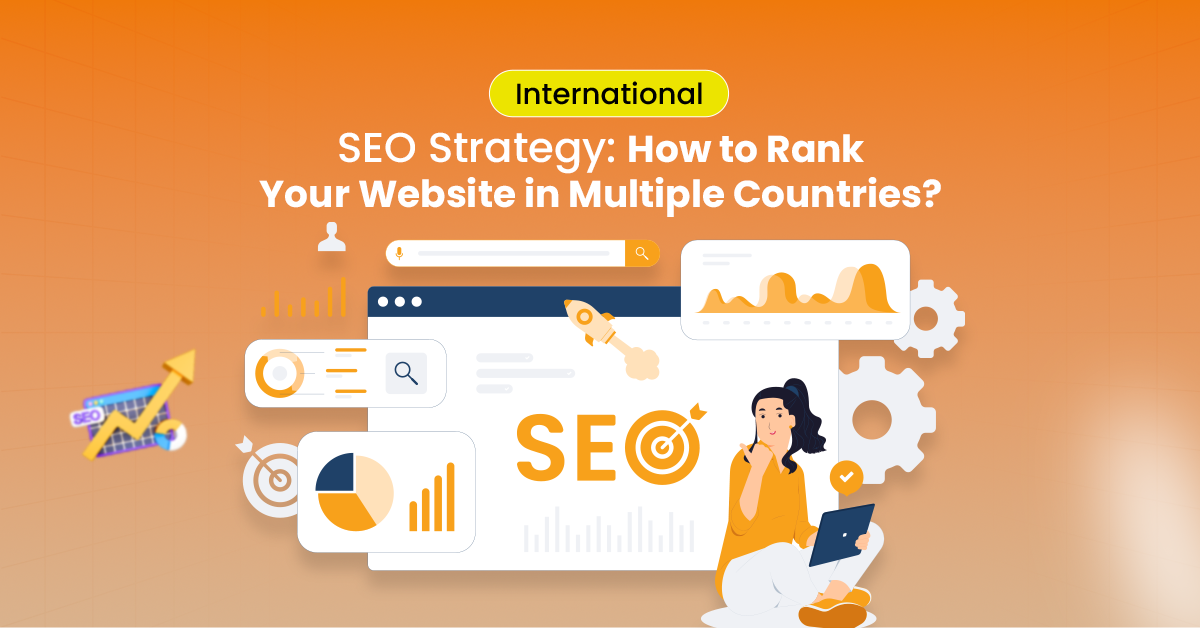
Going global with your website isn’t easy, but it can be incredibly rewarding.
An effective international SEO strategy helps your business reach audiences in other countries, rank higher in local search engines, and grow your brand worldwide.
If you are just starting or looking to strengthen your existing international presence, this guide shares practical tips and strategies you can actually apply.
We’ll start with the basics and gradually explore advanced techniques that can help your website perform better across global markets.
What Is International SEO?
International SEO is the process of improving your website’s visibility in search engines for different countries and languages.
It helps your business reach audiences around the world, not just in one market.
Unlike regular SEO or local SEO, which focus on ranking in a single market, international SEO is designed to help your website perform well in multiple countries or languages.
But is international SEO right for your business? Keep reading to find out.
Does Your Business Need an International SEO Strategy?
You should consider doing international SEO if you’re ready to reach and serve customers in other countries and languages.
Here are three ways to see if your business is ready for international expansion:
1. Analyse Your Current Traffic for an Effective International SEO Strategy.
Start by looking at where your website visitors are coming from.
If you notice a significant number of visitors from other countries, it may be worth exploring international SEO and expanding your offerings.
You can check this using Google Analytics 4 (GA4).
Open your account and go to Reports > User Attributes > Demographic Details to see where your visitors are located.
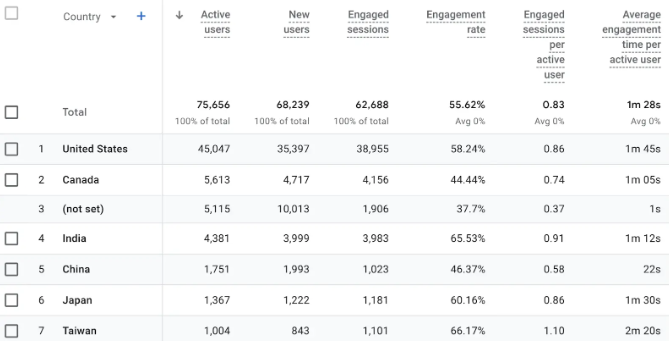
Next, pay attention to how these international visitors interact with your site:
- Which products or services do they view
- How long do they spend on those pages
- Whether they take actions that support your business goals, like filling out forms or making inquiries
Example
If you run a U.S.-based brand and notice visitors from France spending a lot of time on a product page, and even submitting forms, this is a strong signal that the French market could be a good opportunity for expansion.
2. Assess Market Viability Before Investing in International SEO Services.
Market viability helps you determine whether expanding into a new region is practical and likely to be profitable.
One way to gauge this is by looking at your competitors.
If a market has several successful competitors, rather than just one or two dominant players, it usually indicates there’s enough demand to support your business.
Tools like Semrush’s Market Explorer can make this assessment easier.
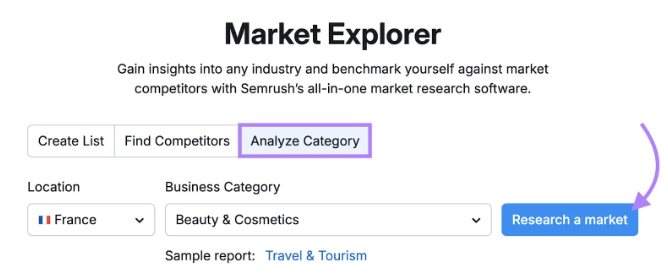
Simply go to the “Analyse Category” tab, select your category, enter the location you’re interested in, and click “Research a market.”
The Overview tab will give you important insights. Look for:
- Market Size – the number of potential buyers
- Market Traffic – total monthly website visits
- Market Consolidation – how concentrated the market is; a lower concentration suggests opportunities for new businesses
Before entering a new market, make sure you also consider:
- Whether you can manage international shipping and logistics
- Country-specific rules and regulations
- Cultural preferences and buying habits of local customers
3. Review International SEO Resource Requirements.
Expanding into new markets with SEO requires the right resources to succeed.
To implement an effective international SEO strategy, you’ll need to invest in a few key areas:
- Professional translation and content localisation, including website text, blog posts, and images
- Technical set-up, such as region-specific URLs and hreflang tag implementation
- Additional content support, such as writers, editors, or content managers
Once you understand what resources are needed, you can make a more informed decision about whether your business is ready to expand internationally.
International SEO strategy: Best Practices to Boost Your Rankings
To build a successful international SEO strategy, you should start by researching your target markets and understanding local search habits.
Not only this, but you need to adapt your content for each audience and establish authority in those regions.
1. Conduct Thorough Market Research for Different Regions.
Market research helps you understand who your competitors are, what your target audience wants, and how people behave in each region you plan to enter.
This information allows you to tailor your international SEO approach for each market and reach the right audience more effectively.
Tools like Semrush’s Market Explorer make this process easier. Start by opening the tool and selecting the “Find Competitors” tab.
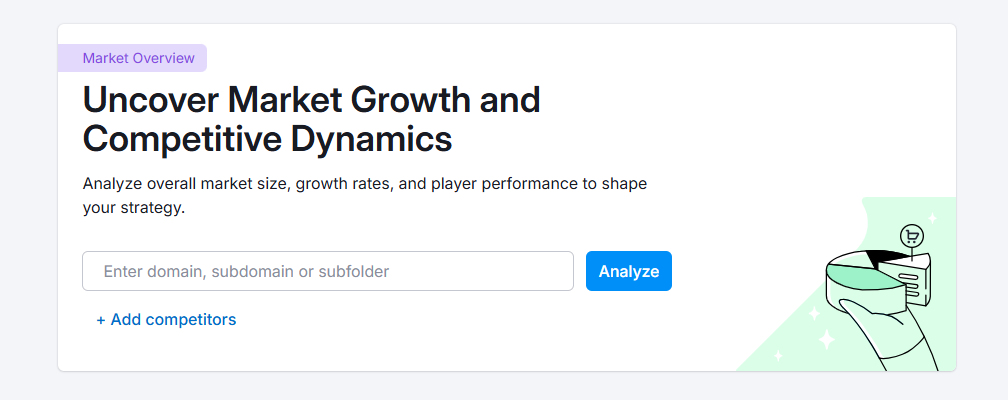
Enter your domain and target location, then click “Research a market.”
The Overview tab will show you the main competitors, top and trending keywords, and other important insights.
This gives you a clear picture of your new market and who you’ll be competing with.
Next, check the Audience tab to learn more about the target market’s demographics, including age, income level, interests, social media habits, and the websites they visit.
For example, if you discover that your audience in the new market mainly belongs to a high-income group, you can focus your localised content on premium features and quality to better appeal to them.
2. Identify Keywords for Your Target Country.
International keyword research helps you find the search terms people in different countries and regions use to look for products, services, or information online.
When choosing keywords, it’s important to consider cultural differences, local search habits, and language variations.
Example
For example, if you sell glasses and want to expand to Mexico, you would use the word “lentes” (commonly used in Mexico) instead of “gafas” (used in Spain).
A good way to start is by analysing the keywords your competitors are ranking for.
Tools like Semrush’s Keyword Gap can help.
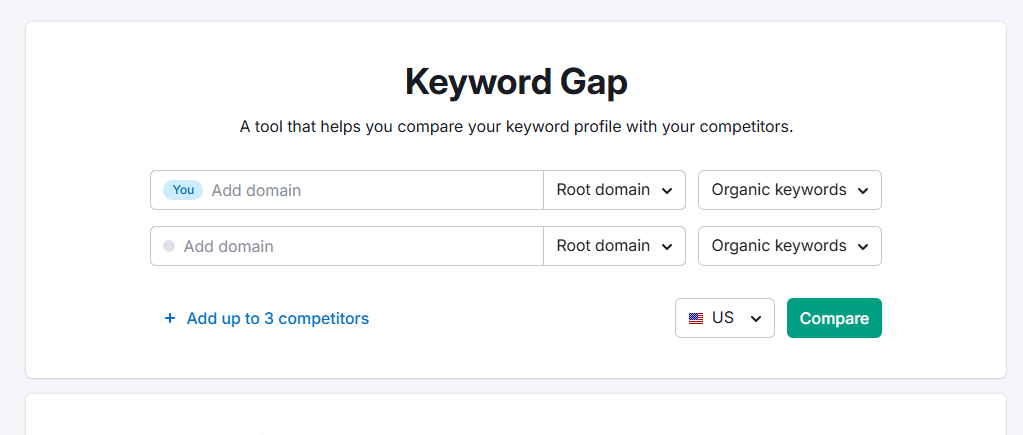
Simply enter your domain, add up to four competitors, and select the target country.
Then click “Compare” to see which keywords are driving traffic for your competitors and which opportunities you can target in your new market.
After running a keyword gap analysis, you’ll identify opportunities where you’re not ranking at all (“Missing”) and areas where your ranking is lower than your competitors’ (“Weak”).
The results will show a table with details for:
- Keywords you currently outrank your competitors for
- Keywords you’re not ranking for
- Keywords where competitors outrank you
You can also filter this list using different criteria, such as average monthly search volume or keyword difficulty, which shows how hard it is to rank in the top 10 for a particular term.
Once you have a list of promising keywords, you can expand your research using Semrush’s Keyword Magic Tool.
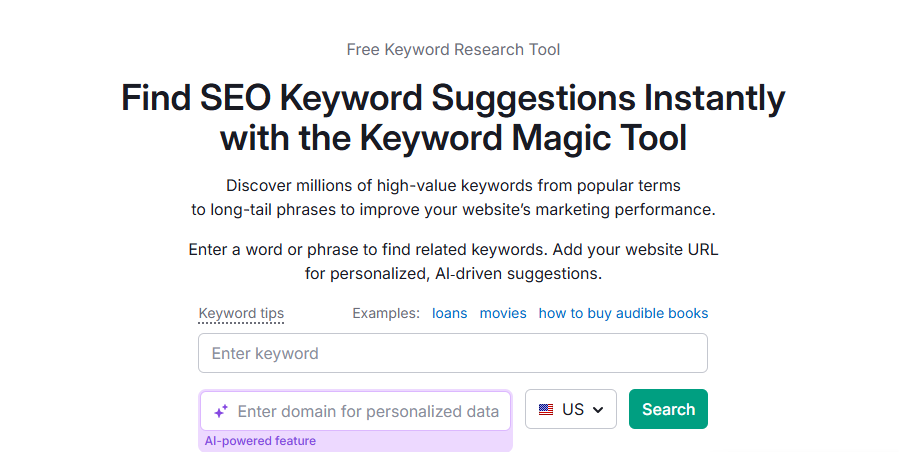
Enter your chosen keyword and domain, select your target location, and click Search. This will give you more relevant keyword ideas to target.
Example
A U.S. company expanding to the U.K. might start with the broad term “UK clothing brands”.
The tool will then suggest related keywords that could be easier to rank for or more relevant to the local audience.
3. Adapt Your Content for Cultural and Regional Preferences.
Content localisation means adjusting your website’s content to match the cultural expectations and preferences of your target audience.
It’s more than just translation.
Translation changes text from one language to another, keeping the meaning intact.
Localisation, on the other hand, adapts your messaging, visuals, and examples to fit the values, culture, and context of the local audience.
Example
An American beauty brand created region-specific content for its European audience, connecting its products to a sport popular in Europe.
This made the content more relatable and engaging for that market.
To localise your content effectively, start by researching your target audience’s preferences.
Then adapt your messaging, visuals, and examples to reflect what resonates with them.
Some ways to do this include:
- Creating content for local holidays, like the Lunar New Year in China
- Following legal and regulatory requirements, such as GDPR in the EU
- Translating accurately while reflecting regional idioms, slang, and expressions
- Addressing the specific needs, challenges, or interests of your audience through relevant topics
- Adjusting currency and pricing to match local standards
- Linking to trusted regional sources to build credibility and relevance.
4. Build Relevant Backlinks.
Getting backlinks from reputable websites in your target market helps search engines understand that your content is relevant for that region.
Local backlinks also bring targeted traffic to your regional pages.
To attract backlinks from sites in your target region, your content needs to be meaningful to local audiences.
Example
If you have an infographic about hiring trends in the U.S., simply translating it into Spanish won’t make it useful for people in Spain.
Including local hiring data and visuals specific to that region makes it more valuable and increases the chances of earning backlinks.
The format of your content also matters. Some types of content that often attract backlinks include:
- In-depth guides and tutorials that show your expertise
- Original research and data
- Infographics and other visualisations
- Case studies and client success stories
- Interactive content, such as quizzes or calculators
You can find backlink opportunities and manage outreach using Semrush’s Link Building Tool.
Just enter your domain URL into the tool and click “Start Link Building” to get started.
Next, follow the prompts to set up your project. Be sure to include local keywords, select your target country, and add your regional competitors. Then click “Start Link Building.”
Once your project is set up, go to the “Prospects” tab to see a list of websites you can approach for backlinks.
Add the most promising prospects to your “In Progress” list, and then create and send personalised outreach messages to start building connections.
International SEO Checklist: Essential Technical Guidelines.
Taking care of technical SEO is essential for international SEO.
It ensures search engines can find, understand, and properly rank your content in each target region, which improves your visibility globally.
To make sure you cover everything, here’s an international SEO checklist with three key technical elements you need to get right:
1. Use Region-Specific URLs.
Region-specific URLs help both users and search engines understand which version of your website is intended for each country or language.
Google recommends using one of the following approaches:
- Country-specific domains – Create a separate domain for each market, such as www.yourwebsite.fr. This is the clearest way to show your target country to users and search engines. It works well for a single country but is more expensive.
- Subdomains with a generic top-level domain (gTLD) – Use a subdomain for each region, like fr.yourwebsite.com. This is easier to set up than separate domains and works well if your site is hosted in multiple locations. However, users may not immediately recognise the subdomain as country-specific.
- Subdirectories with a gTLD – Use folders for each region, such as www.yourwebsite.com/es for Spanish content. This is the simplest option to implement, though it doesn’t signal the country as clearly as a country-specific domain.
2. Implement Hreflang Tags to Improve Your International SEO.
Hreflang tags are HTML attributes that tell search engines which version of a page to show users based on their language and location.
They are an essential part of international SEO because, without them, users might see content in the wrong language in search results.
Here’s how hreflang tags work:
Imagine your U.S. based company wants to serve content in French to audiences in France.
You would need hreflang tags for both the English and French versions of the page.
Always include tags for all language versions, including the original page. Google calls this a “self-referencing hreflang” and recommends it to ensure proper implementation.
After adding the tags, you can use a Site Audit tool to check that your hreflang setup is working correctly.
3. Handle Duplicate Content and Canonicalisation Issues
When you have similar content across different regional versions of your website, search engines need guidance on which version to prioritise.
Without this, you risk creating duplicate content, which happens when the same or very similar content appears on multiple pages.
This is common for international websites.
Example
If you sell shoes in both the U.S. and the U.K., your product descriptions may be nearly identical.
Search engines might treat these pages as competing against each other, a problem known as keyword cannibalisation.
Canonical tags solve this issue by indicating the main version of a page for each language or region. Here’s an example of a canonical tag:
<link rel=”canonical” href=”https://yourwebsite.com/uk/product-category/product-name”/>
If you’re using both hreflang tags (for language targeting) and canonical tags on your international pages, make sure they are consistent.
For instance, the English version’s canonical tag should point to the English page, and the French version’s canonical tag should point to the French page.
This ensures search engines understand which page to show in each region.
How to Monitor Your International SEO Performance?
Tracking your performance in each target market is essential to see what’s working and where you may need to adjust your international SEO strategy.
Start with Google Analytics 4 (GA4) to understand how visitors from different regions interact with your site. Focus on metrics such as:
- How much organic traffic comes from each country
- Which content performs best in different markets
- How visitors from each region engage with your site
- Whether visitors are completing goals or converting
- Regions with higher or lower engagement
You can find these insights in GA4 under Reports in the left sidebar.
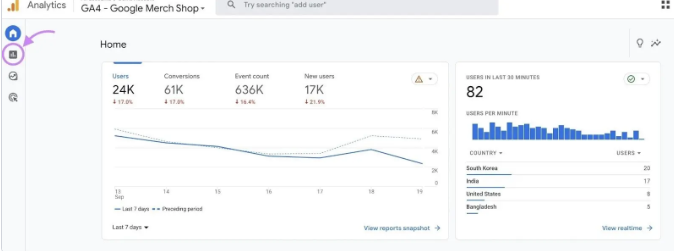
Next, monitor how visible your content is in local search results using Semrush’s Position Tracking tool.
This tool tracks your keyword rankings in different regions, showing where your pages appear for local audiences.
To use it, open the tool, enter your domain, and click “Set up tracking.” Follow the prompts to configure tracking for your target locations.
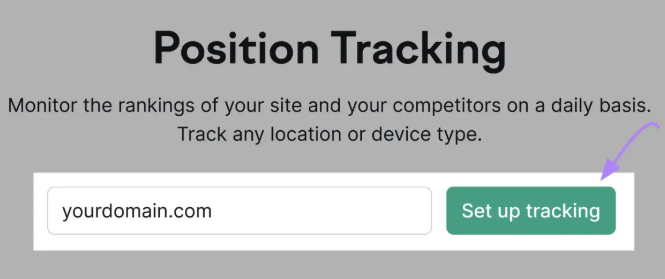
Once the project is ready, go to the “Devices & Locations” tab to view your search visibility across multiple regions.
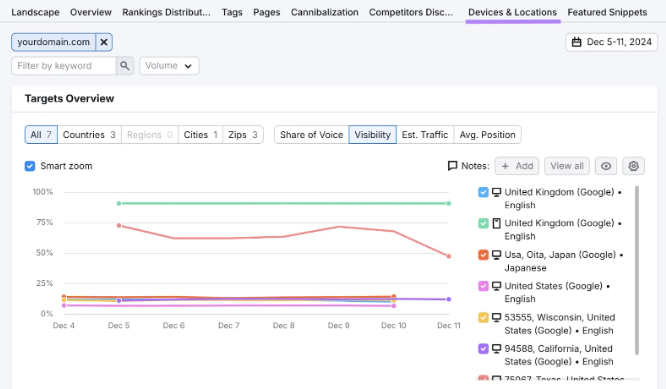
From here, review your rankings and any changes over time.
This will help you understand whether your international SEO strategy is delivering results and where adjustments may be needed.
Grow Your Brand Across Borders with an International SEO Strategy
Your audience isn’t limited to one country; why should your website be?
Use international SEO to reach the right people, in the right place, at the right time.
Let Pixel Media 360 help you capture your global audience before your competitors do.
Frequently Asked Questions
Use the right language and region-specific keywords, add hreflang tags to show Google which language or country version to show, and host content on local domains or subfolders if possible. Make sure your website loads fast and works well on mobile devices.
Global SEO focuses on reaching users worldwide with a single version of your website. International SEO targets specific countries or languages, creating content and strategies for each region.
Hreflang tags tell search engines which language or country version of a page to show. This prevents duplicate content issues and improves user experience.
You can use country-specific domains (like .uk, .de) for better local relevance, but subfolders or subdomains also work if managing multiple domains is hard.