



Is your content marketing strategy not delivering the results you expected?
You’re not alone. Many businesses struggle with this, often without even realising the content marketing mistakes they are making.
According to a report by Forbes, around 94% B2B small businesses use content marketing, but very few see real success.
In fact, only 9% of B2B marketers consider their content marketing “very effective.”
So why do so many businesses fail? In most cases, it’s not the content itself; it’s the strategy.
Some companies don’t have a clear strategy at all, and without one, even great content marketing ideas can fall flat.
That brings us to the reasons why businesses fail at content marketing:
Why Most Businesses Fail at Content Marketing? (Avoid These Content Marketing Mistakes)
1. You Lack a Clear Content Marketing Strategy.
It’s simple: most businesses fail at content marketing because they don’t have a clear strategy.
When building your strategy, study your competitors. Learn from both their successes and mistakes.
- Why has their content worked? Try to emulate it.
- Where are they sharing it? Use the same channels.
- Who is engaging with it? Target those prospects.
A key part of any effective strategy is understanding your content marketing funnel.
Success in content marketing comes down to having a plan and sticking to your objectives.
In fact, 66% of companies that consider their content marketing successful had a documented content marketing strategy.
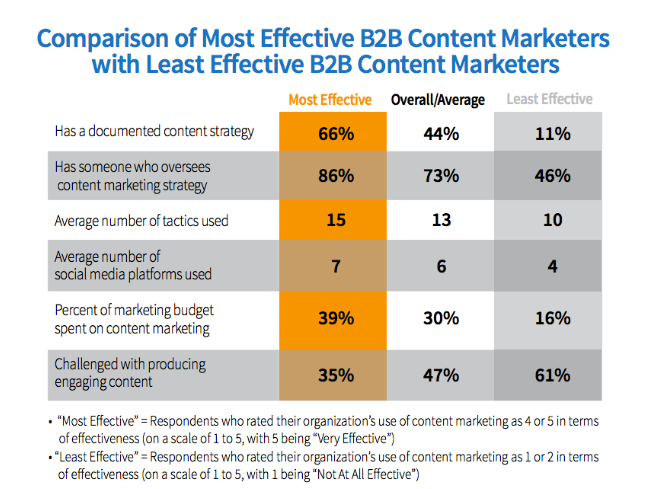
B2B Content Marketing Trends – North America: Content Marketing Institute/Marketing Profs
The most successful B2B content marketers used a few more social media platforms and marketing tactics than those who were less successful.
Having a clear and focused strategy can make the difference between succeeding and failing with content marketing.
2. You Publish Boring or Unengaging Content.
Boring content doesn’t get read or shared. For your content marketing to work, you need to create content that is interesting and engaging.
No matter the topic, it’s possible to make your content appealing.
Using creative content marketing ideas and aligning them with your content marketing funnel can help you reach the right audience at the right stage.
But creating interesting content is only the first step. Your content should also inspire your audience.
Content that sparks discussion or presents a fresh perspective keeps readers coming back and can even go viral.
Many businesses create boring content because:
- They hire inexperienced or cheap writers.
- They aren’t sure what type of content their audience wants.
- They don’t understand their target audience.
- Their content lacks creativity.
3. You’re creating content but not promoting it.
Creating content but not promoting it is one of the biggest mistakes you can make.
If you publish a blog post and then leave it there, it’s almost like you never created it.
Promotion isn’t optional in content marketing; it’s a major part of the process. Even great content won’t perform if no one knows it exists.
The good news is there are plenty of ways to share your work:
- Social media
- Email marketing
- Referral sharing
The key is to choose the platforms where your audience spends time and show up there consistently.
Each channel needs attention and effort if you want real results.
Consistency really matters. Posting once in a while isn’t enough.
A steady presence on your blog and social media builds trust, visibility, and momentum over time.
At the end of the day, content only works when people actually see it. Publishing without sharing is like talking to an empty room.
No matter how valuable your message is, it can’t make an impact unless it reaches the right audience.
4. You’re overlooking the content marketing analytics.
Once you’ve set your goals, the next step is tracking your success.
If you skip analytics, there’s no way to know what’s working and what’s not.
And when I say “track your success,” I don’t mean just looking at one number; you need to pay attention to multiple metrics.
Many small B2B businesses judge their content marketing success mainly by website traffic.
That’s fine, but traffic alone doesn’t tell the whole story.
You should measure your content marketing using a mix of metrics, like website traffic, SEO rankings, social media shares, and even customer satisfaction.
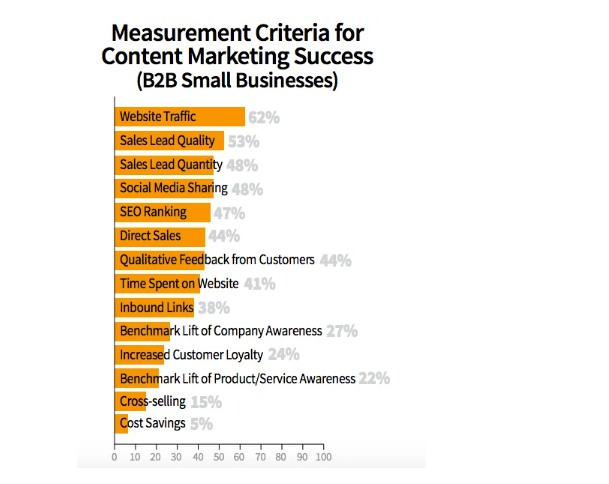
Small Business Content Marketing Trends – North America: Content Marketing Institute/Outbrain
But the bigger question is: what do you want your blog to achieve?
- More email sign-ups?
- Higher sales?
- Better engagement?
When you’re clear about your goal, it’s easier to track whether your content is helping you get there.
The key is to choose metrics that show real progress, not just numbers that look good on paper.
5. You’re targeting the wrong audience.
Before you can create a content marketing strategy, you need to know who your audience is.
Ask yourself:
- Who am I writing for?
- What problems are they facing?
- What questions do they have?
Think about your social media audience, too.
- Will they engage with your posts?
- Who actually buys your product
- Are they likely to share it with others?
If you don’t know your audience, you won’t know where or how to promote your content.
It helps to know details about your target customer, their age, gender, income, spending habits, and anything else that might be important.

comScore
For example, Facebook users cover a wide range of ages, while younger audiences are more likely to use Snapchat or Instagram.
This information is key to figuring out where your audience spends their time and how to reach them effectively.
6. You’re working in a competitive and saturated niche.
I’ll be honest: some niches are just tougher when it comes to content marketing.
Some industries aren’t exactly exciting, while others are packed with big-name competitors.
But here’s the thing: just because it’s tricky doesn’t mean you should give up.
You can succeed in any niche; it might just take a little extra effort and creativity.
If you’re in a competitive space, take a close look at your competitors.
- What are the successful ones doing right?
- And what mistakes are others making that you can learn from?
For niches that aren’t naturally “interesting” or where your audience is hard to reach online, get creative.
Focus on content that actually helps your audience, not just entertains them.
Try storytelling too, share your company’s story, show the people behind the brand, and build trust.
At the end of the day, people connect with people, not robots.
7. You Are Weakening Your Content Marketing Strategy by Neglecting SEO.
Some people like to say that SEO is dead. But that’s just not true.
SEO is a huge part of content marketing. You can’t have a successful content strategy without it.
Search isn’t going anywhere.
In fact, take a look at the numbers: only 16% of referrals come from social media, while a massive 84% come from search and direct visits.
That tells you everything you need to know.
In short, SEO is a key part of content marketing. If you want your strategy to work, learning the basics of SEO isn’t optional; it’s essential.
Smart Strategies to Prevent Content Marketing Mistakes
Now that you know why so many businesses struggle with content marketing, let’s dive into how you can turn things around and make your plan a success.
1. Set SMART Goals to Strengthen Your Content Marketing Strategy.
SMART goals are:
- Specific
- Measurable
- Attainable
- Relevant
- Time-bound
Your content marketing strategy should be built around SMART goals.
They help you avoid vague or unrealistic objectives and give you a clear path to success.
In fact, just setting SMART goals is enough to create a basic content marketing strategy.
If the idea of building a full strategy feels overwhelming, start with SMART goals. It’s a simple way to get going.
2. Implement a proper content marketing funnel.
Think of the content marketing funnel as a roadmap that guides people from discovering your brand to finally choosing your business.
Good content isn’t random. It’s created with purpose, and each piece plays a role in moving customers closer to a decision.
The funnel has three simple stages:
- TOFU (Top of the Funnel) – Awareness
This is where people are just discovering you. They might not know your brand yet, or even fully understand their problem.
Blogs, social posts, and educational content help grab attention and build trust. At this stage, you’re helping, not selling.
- MOFU (Middle of the Funnel) – Consideration
Now your audience is interested and exploring their options. This is your chance to show expertise.
Guides, case studies, and email content help them see why your solution makes sense. You’re building a relationship, not pushing a sale.
- BOFU (Bottom of the Funnel) – Conversion
This is decision time. Testimonials, demos, and strong offers help remove doubts and make the next step easy.
Your content should give prospects the confidence to choose you.
When your content supports every stage of the content marketing funnel, it works like a system, attracting the right people, nurturing them, and turning interest into action.
3. Focus on Building a Loyal Community.
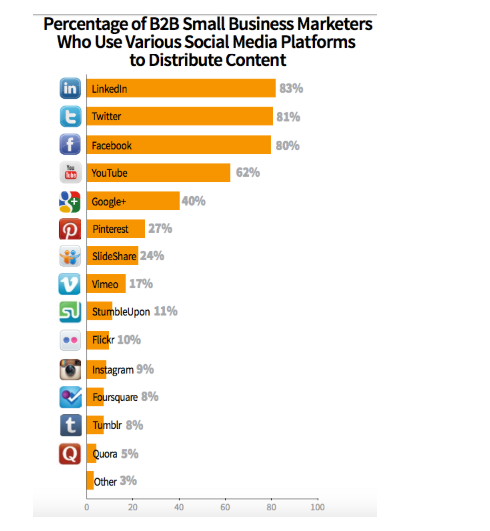
One of the most important parts of content marketing is building your community, your audience. And let’s be honest, this part takes patience.
You need to figure out who your community is, where to find them, and how to keep them engaged over time.
A big part of this is knowing which social media channels your audience actually uses.
It also helps to look at where other B2B businesses are active. Most small businesses focus their content efforts on LinkedIn, Twitter, and Facebook.
4. Create great titles and headlines.
If your title isn’t interesting, your audience will assume the content itself isn’t worth reading.
Your headline is your first impression; it’s how you grab attention and convince people to read your content.
In many ways, it’s the most important part of what you create.
Title length matters too, but there’s no one-size-fits-all answer. It really depends on your goals.
For example:
- Titles with 8–12 words tend to get the most shares on Twitter.
- Titles with 12–14 words get the most likes on Facebook.
- And if you want to rank in search engines, keep your title under 70 characters.
When planning your content strategy, pay attention to which types of headlines perform best in your industry.
Be creative, make them catchy, and always aim to spark curiosity.
5. Experiment with Innovative Content Marketing Ideas.
Creating a successful content marketing strategy means using different types of content.
You don’t want to overwhelm your team, but you also don’t want to stick to just blog posts. Different content reaches different audiences.
Some people prefer reading blogs, others like watching YouTube videos, and some engage more on platforms like Twitter.
There are lots of types of content you can use, including:
- Images
- Text
- Audio
- Video
- Case studies
- Emails
- Ebooks
- Podcasts
- Press releases
- Blog comments
- Articles
- Blogs
- Industry news
When planning your content strategy, think about which types of content work best for your audience and your goals.
And don’t be afraid to experiment, trying new formats can help you reach more people.
6. Incorporate strong call to action for better conversions.
Here’s a conversational, simplified, and professional rewrite of your content:
A call to action, or CTA, is really simple: if you want your reader or customer to do something, just ask them.
It could be anything like:
- Click this button
- Sign up now
- Add your email
- Download this e-book
A good example is a meta call to action, where a company clearly tells you what they want you to do, like “click here” to enjoy more content.
CTAs are important in content marketing because they keep your audience engaged and guide them to other content or actions they might find valuable.
How Pixel Media 360 Helps You Avoid Content Marketing Mistakes?
Content often underperforms not because brands lack effort, but because there’s no clear structure behind it.
At Pixel Media 360, we build organized, data-backed strategies that connect content directly to business goals, search behavior, and customer intent.
We review your full content system, strategy, funnel gaps, messaging, SEO, and conversion flow, to find where opportunities are being missed.
From there, we create a focused roadmap designed to improve visibility, strengthen authority, and generate qualified leads instead of empty traffic.
Every decision we make is tied to measurable results.
Our approach is practical, performance-driven, and built around real market demand. You get a strategy that supports steady growth, not random activity.
Your competitors are improving their content right now, don’t fall behind. Lock in your free audit today before it costs you more growth.
Conclusion
Content marketing only fails when you don’t have a strategy. If you do, you’re already ahead.
Remember, creating content is just half the battle; promoting it is equally important.
Know your audience, share your content where they are, and be consistent.
Content marketing is a long-term game. Results won’t happen overnight, and dips in engagement are normal.
Keep at it, stay patient, and over time, you’ll build a loyal community and see the reach you want.
Frequently Asked Questions
Content marketing can be tough because it needs consistent planning, engaging content, audience understanding, promotion, and performance tracking. Without a clear strategy, even good content may not succeed.
Effective strategies include knowing your audience, creating engaging content, sharing it on the right channels, optimising for SEO, and analysing results to improve performance.
Pixel Media helps businesses create strong strategies, optimise content for SEO, promote it effectively, and track results. Schedule your free content audit today to get started.